Change a price without reprinting the table tents.
Menus change constantly and print does not. A code on the table points at a menu you edit yourself, so a sold-out dish disappears in seconds rather than at the next print run.
Where it gets used
Table tents and window cards
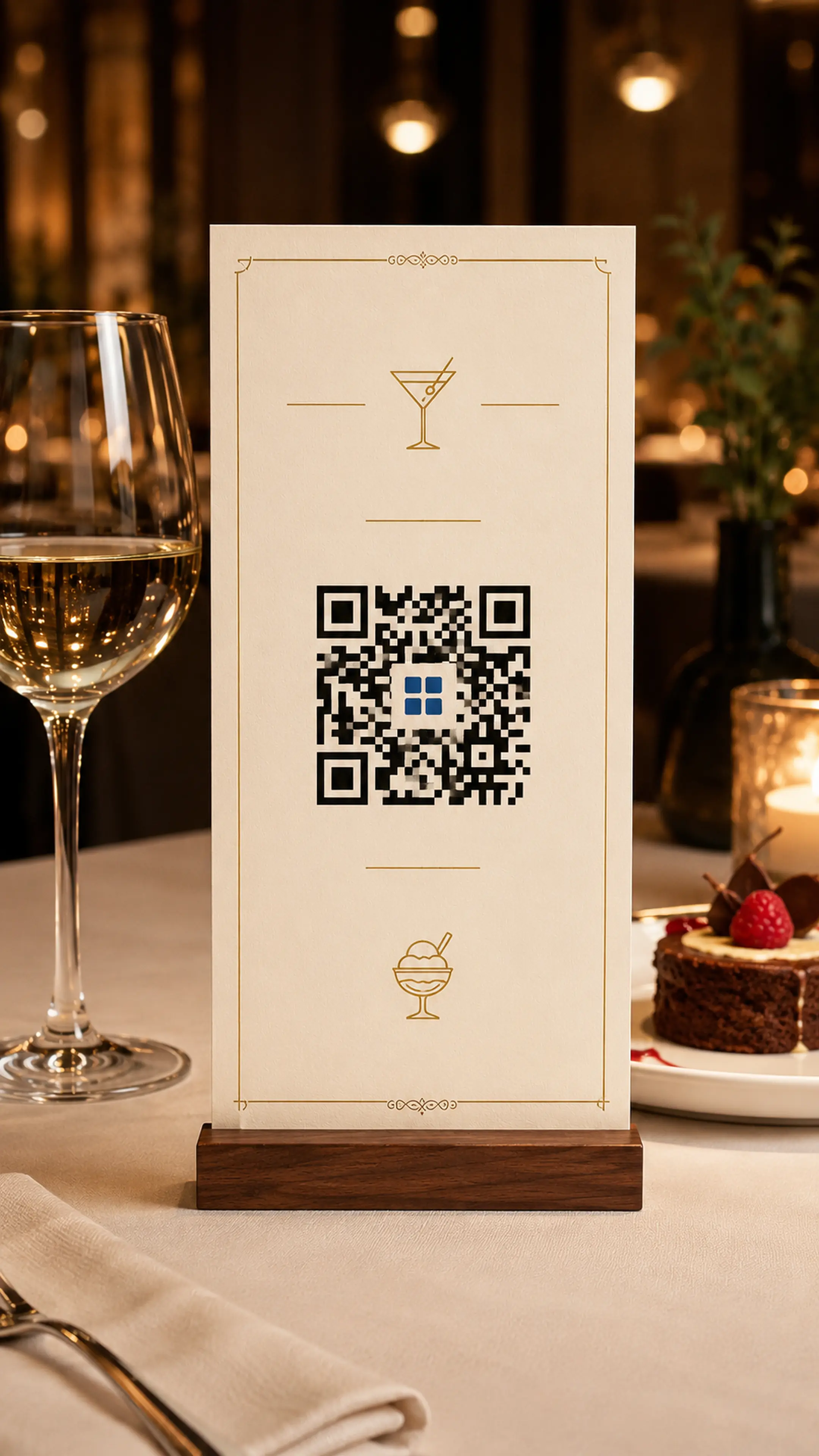
One code per table, printed once. Mark a dish unavailable at 7pm and the next guest to scan it does not see it.
Seasonal menus
Swap the whole menu on the day the season changes. The printed code is untouched, and last season stays in the history if you need it back.
Reviews on the receipt
A code that routes happy guests to a public review and unhappy ones privately to you, before they reach a review site.
Why it has to be dynamic
A restaurant that prints a static menu code has to reprint every table tent to change a price. That is the single most common and most expensive QR mistake in hospitality.
A dynamic code encodes a short link that belongs to you. The pattern is fixed at the moment you print it and never has to change again — you change where it leads, as often as you like, and every copy already in the world follows.
Code types that fit
- Restaurant menu
- Reviews
- Business page
- Wi-Fi
Each brings its own fields, and the ones that need a page get a hosted mobile page you edit yourself — no website of your own required. See all the types.